



Autoclave Buying Guide: Portable vs Vertical vs Radial-Locking Autoclaves
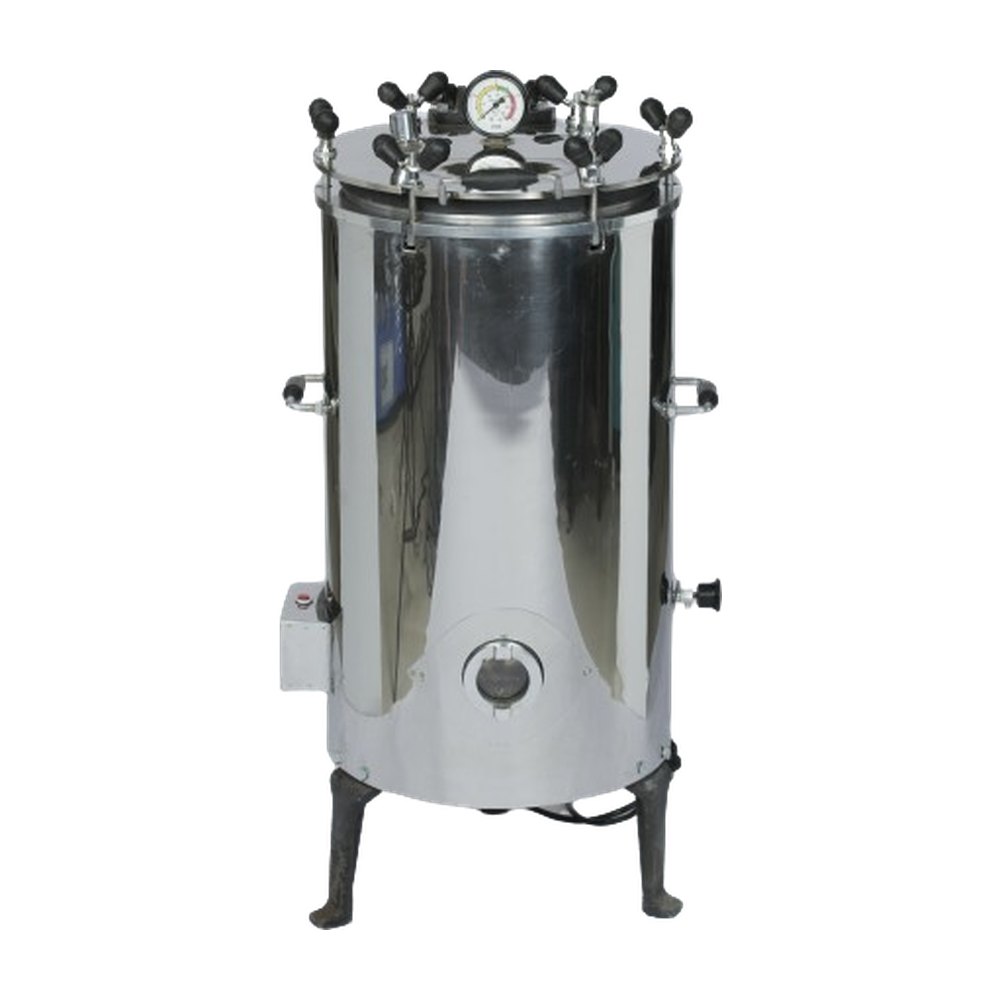
An autoclave is often the most-used instrument in a microbiology, pathology or pharma QC lab. Every batch of culture media, every load of glassware and every bag of waste goes through it. If you pick one that is too small or slow to open, the whole lab ends up waiting for it.
This guide explains how a laboratory autoclave works and compares three common designs: the portable pressure-cooker type, the vertical autoclave with wing-nut locking, and the vertical autoclave with a radial locking lid. It also covers what to check before you raise a purchase order. Every model mentioned is made by Popular Traders in Ambala, Haryana.
An autoclave sterilises with saturated steam under pressure. When water is heated in a sealed vessel, the pressure rises and so does the boiling point. At about 15 psi above atmospheric pressure, steam reaches 121°C. Steam at this temperature passes its heat into the load very efficiently and kills bacteria, fungi, viruses and heat-resistant bacterial spores, which dry heat at the same temperature cannot reliably do.
The standard laboratory cycle is 121°C at 15 psi for at least 15 minutes once the whole load has reached temperature. Larger or denser loads, such as big media bottles or waste bags, need longer. Autoclaves are used for:
Materials that are damaged by moisture or heat, such as powders, oils and some plastics, need a different method. For dry-heat sterilisation of glassware, see our guide Hot Air Oven vs Incubator vs BOD Incubator.
The three designs below all sterilise at 121°C. The main differences are capacity, how the lid closes and how often you can run a cycle.
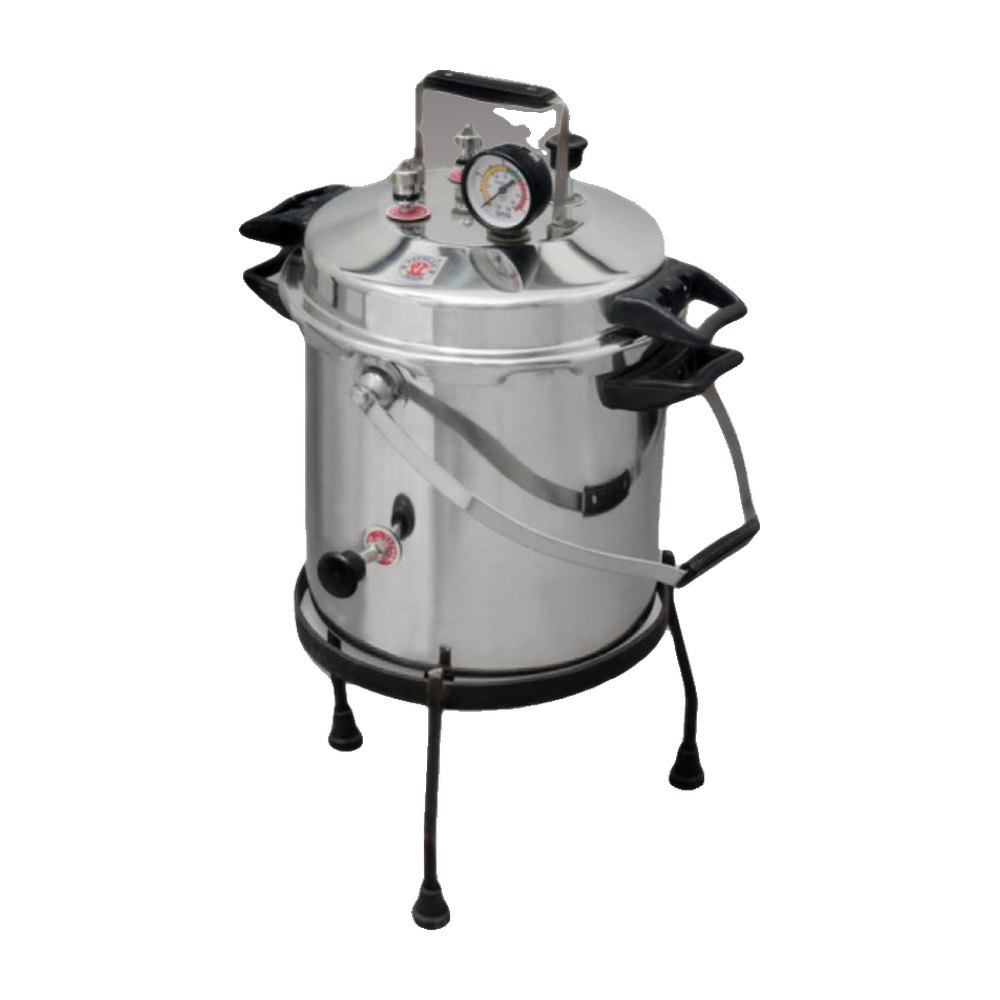
Portable autoclave (PT-455). The PT-455 portable autoclave is a pressure-cooker type unit with a jointless SS 304 vessel of 25 litres (300 x 300 mm). It is compact and easy to move, and suits clinics, dental practices, small microbiology labs and teaching labs that sterilise a few flasks or instrument trays at a time.
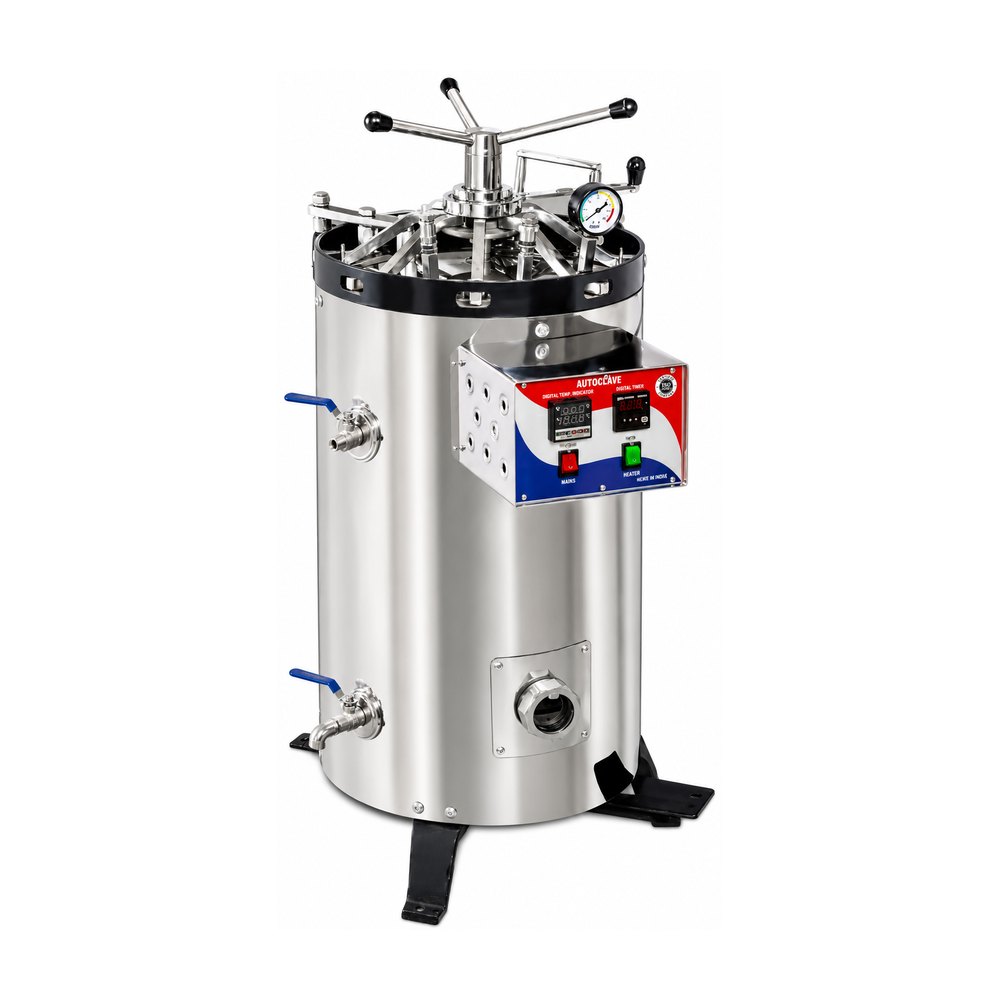
Vertical autoclave, wing-nut locking (PT-457). The PT-457 vertical autoclave is electrically heated and is the usual choice for hospitals, pathology labs, pharma microbiology, food and dairy labs and colleges. It has a double-walled body with an SS 304 mirror-finish outer, SS 304 lid and interior, silicone gasket, SS basket and analog dial gauge. It runs at 15–20 psi and 121°C and comes in five sizes from 40 to 150 litres.
Vertical autoclave, radial locking (PT-458). The PT-458 has the same build and the same five sizes as the PT-457. The difference is a radial locking lid, which opens and closes faster than tightening a ring of wing nuts. If your lab runs several cycles a day, that time adds up.
| Feature | Portable PT-455 | Vertical PT-457 | Vertical PT-458 |
|---|---|---|---|
| Type | Pressure-cooker type, portable | Vertical, electrically heated | Vertical, electrically heated |
| Capacity | 25 litres (300 x 300 mm) | 40, 50, 75, 100, 150 litres | 40, 50, 75, 100, 150 litres |
| Body | Jointless SS 304 vessel | Double walled, SS 304 interior and lid | Double walled, SS 304 interior and lid |
| Lid locking | Pressure-cooker type | Wing nuts | Radial locking |
| Working conditions | Steam sterilisation | 15–20 psi, 121°C | 15–20 psi, 121°C |
| Digital option | Not listed | PT-457A (PID with timer + pressure switch) | PT-458A (PID with timer + pressure switch) |
| Best for | Clinics, small and teaching labs | Hospitals, pharma, food and college labs | Busy labs with many cycles a day |
Use this checklist when you compare quotations or write a tender specification.
 Portable Autoclave PT-455View details →
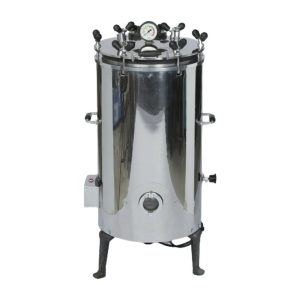 Vertical Autoclave, Electrically Heated PT-457View details →
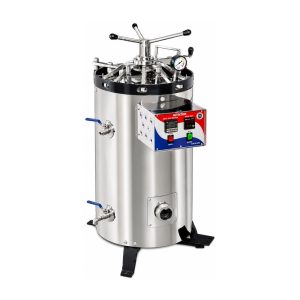 Vertical Autoclave with Radial Locking PT-458View details →
The standard cycle is 121°C at about 15 psi for at least 15 minutes after the load reaches temperature. The PT-457 and PT-458 work at 15–20 psi and 121°C.
They share the same body, sizes and fittings. The PT-457 closes with wing nuts, while the PT-458 has a radial locking lid that opens and closes faster.
Choose by your largest load per cycle. Clinics and small labs often manage with the 25 litre PT-455. Most hospital, pharma and college labs choose a 40 to 100 litre vertical autoclave, and large media or waste loads may need 150 litres.
If you want accurate, repeatable timed cycles that do not depend on someone watching the gauge, yes. The PT-457A and PT-458A add a PID controller with timer and a pressure switch.
Autoclaves are usually dispatched in about 1 week from order. Contact us to confirm the time for the size and options you need.
Need help choosing an autoclave? Request a quote or call/WhatsApp +91-8199900060, email popular1942@gmail.com. We are available 9 AM to 5:30 PM. You can also browse our full range of sterilization and safety cabinets. Popular Traders has made laboratory equipment in Ambala since 1942, is ISO 9001:2015 certified and is an approved seller on GeM.
Need help choosing the right model for your lab?