



Rotary Evaporator Solvent Library: Bath Temperature and Vacuum for 47 Solvents
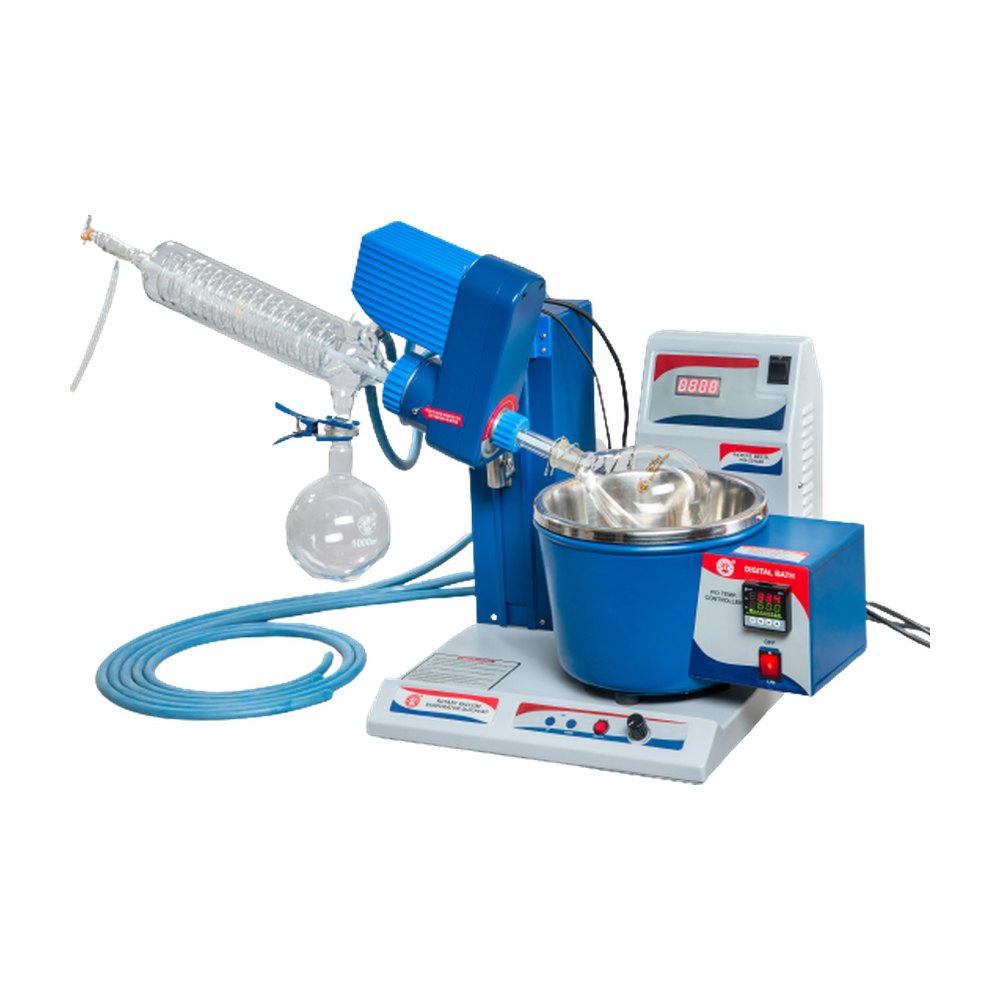
Setting a rotary evaporator is mostly about three numbers: the water-bath temperature, the vacuum and the condenser coolant temperature. Get them right and the solvent comes off quickly, condenses fully and does not bump into the condenser. This library gives starting values for 47 common laboratory solvents, from acetone and methanol to DMF and DMSO.
The values are calculated from published vapour-pressure data using the same rule for every solvent, so you can compare them directly. They are starting points: fine-tune for your own sample, flask size and vacuum pump.
Using a different bath temperature? The free Rotary Evaporator Calculator gives the vacuum and coolant for any bath temperature, and the boiling point of each solvent at any vacuum.
Download the solvent chart (PDF, 1 page)
Vacuum gauge reads in inHg or shows a minus value? Convert it to absolute mbar with the free vacuum gauge converter in Popular LabKit, our set of free lab calculators.
A rotary evaporator works best with about 20 °C between each stage:
Most solvents use a 50 °C bath. Very volatile solvents (DCM, ether, pentane) use 40 °C; high-boiling solvents (toluene, xylene, DMF, DMSO) use 60–90 °C. All of these are within the range of our thermostatic baths (up to 95 °C) and digital PID baths (up to 180 °C).
Grouped by solvent type. Bath and coolant in °C, vacuum in mbar (absolute); boiling point at normal atmospheric pressure.
Peroxide formerFreezing risk in condenserPump to useNeeds a chillerHazard
Download the 1-page PDF chart Print it and keep it next to your rotary evaporator.
| Alcohols | ||||
|---|---|---|---|---|
| Solvent | Boiling point°C |
Bath°C | Vacuummbar | Coolant°C |
| MethanolCH4O | 64 | 50 | 220 | 10 |
| EthanolC2H6O
Piston pump PT-89/35 advised
|
78 | 50 | 105 | 10 |
| 2-PropanolC3H8O · IPA | 82 | 50 | 80 | 10 |
| 1-PropanolC3H8O · n-propanol | 97 | 60 | 70 | 20 |
| 1-ButanolC4H10O · n-butanol | 118 | 70 | 45 | 30 |
| IsobutanolC4H10O · 2-methyl-1-propanol | 108 | 70 | 70 | 30 |
| tert-ButanolC4H10O
Freezes at 25 °C – coolant 25–30 °C
|
82 | 60 | 135 | 25–30 |
| Isoamyl alcoholC5H12O · 3-methyl-1-butanol | 131 | 80 | 45 | 40 |
| Ketones | ||||
|---|---|---|---|---|
| Solvent | Boiling point°C |
Bath°C | Vacuummbar | Coolant°C |
| AcetoneC3H6O | 56 | 50 | 380 | 10 |
| Methyl ethyl ketoneC4H8O · MEK, 2-butanone | 80 | 50 | 155 | 10 |
| Methyl isobutyl ketoneC6H12O · MIBK | 116 | 60 | 60 | 20 |
| Esters | ||||
|---|---|---|---|---|
| Solvent | Boiling point°C |
Bath°C | Vacuummbar | Coolant°C |
| Methyl acetateC3H6O2 | 57 | 50 | 360 | 10 |
| Ethyl acetateC4H8O2 | 77 | 50 | 160 | 10 |
| Isopropyl acetateC5H10O2 | 89 | 50 | 100 | 10 |
| n-Butyl acetateC6H12O2 | 126 | 70 | 60 | 30 |
| Ethers | ||||
|---|---|---|---|---|
| Solvent | Boiling point°C |
Bath°C | Vacuummbar | Coolant°C |
| Diethyl etherC4H10O
Peroxide former
|
34 | 40 | 590 | 0 |
| Methyl tert-butyl etherC5H12O · MTBE | 55 | 50 | 410 | 10 |
| Diisopropyl etherC6H14O · DIPE
Strong peroxide former
|
68 | 50 | 250 | 10 |
| TetrahydrofuranC4H8O · THF
Peroxide former
|
66 | 50 | 270 | 10 |
| 2-MethyltetrahydrofuranC5H10O · 2-MeTHF
Peroxide former
|
80 | 50 | 160 | 10 |
| 1,4-DioxaneC4H8O2
Peroxide formerFreezes at 12 °C
|
101 | 60 | 105 | 20 |
| AnisoleC7H8O | 154 | 80 | 35 | 40 |
| Hydrocarbons | ||||
|---|---|---|---|---|
| Solvent | Boiling point°C |
Bath°C | Vacuummbar | Coolant°C |
| n-PentaneC5H12
Chiller at 0 °C
|
36 | 40 | 570 | 0 |
| CyclopentaneC5H10
Chiller at 0 °C
|
49 | 40 | 350 | 0 |
| n-HexaneC6H14 | 69 | 50 | 250 | 10 |
| CyclohexaneC6H12
Freezes at 7 °C
|
81 | 50 | 160 | 10 |
| n-HeptaneC7H16 | 98 | 60 | 125 | 20 |
| IsooctaneC8H18 · 2,2,4-trimethylpentane | 99 | 60 | 130 | 20 |
| Petroleum ether 40–60 °Cmixture (C5–C6 alkanes)
Start at 500 mbar, lower slowly
|
40–60 | 40 | 400 | 0 |
| Petroleum ether 60–80 °Cmixture (C6–C7 alkanes)
Start at 300 mbar, lower slowly
|
60–80 | 50 | 200 | 10 |
| BenzeneC6H6
Carcinogen – avoid
|
80 | 50 | 160 | 10 |
| TolueneC7H8 | 111 | 60 | 80 | 20 |
| XyleneC8H10 · mixed isomers
Coolant ≥ 15 °C
|
138 | 70 | 45 | 30 |
| Chlorinated solvents | ||||
|---|---|---|---|---|
| Solvent | Boiling point°C |
Bath°C | Vacuummbar | Coolant°C |
| DichloromethaneCH2Cl2 · DCM, methylene chloride
Chiller recommended
|
40 | 40 | 470 | 0 |
| ChloroformCHCl3
Toxic – fume hood
|
61 | 50 | 320 | 10 |
| 1,2-DichloroethaneC2H4Cl2 · EDC | 84 | 50 | 135 | 10 |
| ChlorobenzeneC6H5Cl | 132 | 70 | 55 | 30 |
| Polar aprotic and nitrogen solvents | ||||
|---|---|---|---|---|
| Solvent | Boiling point°C |
Bath°C | Vacuummbar | Coolant°C |
| AcetonitrileC2H3N | 82 | 50 | 150 | 10 |
| PyridineC5H5N
Fume hood – strong odour
|
115 | 60 | 60 | 20 |
| N,N-DimethylformamideC3H7NO · DMF
Piston pump PT-89/35
|
153 | 80 | 35 | 40 |
| N,N-DimethylacetamideC4H9NO · DMAc
Piston pump PT-89/35
|
166 | 90 | 33 | 50 |
| Dimethyl sulfoxideC2H6OS · DMSO
Freezes at 18 °CPiston pump PT-89/35
|
189 | 90 | 12 | 50 |
| N-Methyl-2-pyrrolidoneC5H9NO · NMP
Needs below 10 mbar
|
202 | 90 | 7.5 | 50 |
| Acids and water | ||||
|---|---|---|---|---|
| Solvent | Boiling point°C |
Bath°C | Vacuummbar | Coolant°C |
| Formic acidCH2O2
CorrosivePTFE pump PT-89/30
|
101 | 60 | 115 | 20 |
| Acetic acidC2H4O2 · glacial
Freezes at 17 °C
|
118 | 60 | 45 | 20 |
| Trifluoroacetic acidC2HF3O2 · TFA
CorrosivePTFE pump PT-89/30
|
72 | 50 | 180 | 10 |
| WaterH2O
Antifoam for foaming samples
|
100 | 60 | 75 | 20 |
Values calculated from standard vapour-pressure correlations (DIPPR, Wagner and NIST data). Round figures; always reduce the vacuum gradually to avoid bumping.
Look at the vacuum column. Many vacuum gauges in India read in inches of mercury (″Hg) below atmosphere: 27″ Hg is about 100 mbar absolute, and 29.5″ Hg is about 15 mbar.
Our guide on sizing a chiller and vacuum pump for a rotary evaporator covers this in more detail.
For solvents with a coolant temperature of 10 °C or below, tap water is too warm for most of the year: in summer it is often 30 °C. The vapour then passes the condenser and ends up in the pump or the room. A recirculating chiller such as the PT-80 (−10 °C to ambient) holds the coolant at the right temperature all year and recovers far more solvent.
Watch the freezing point, too. Acetic acid, 1,4-dioxane, DMSO, cyclohexane and tert-butanol can freeze inside a condenser that is too cold and block it. The notes column tells you when to keep the coolant warmer.
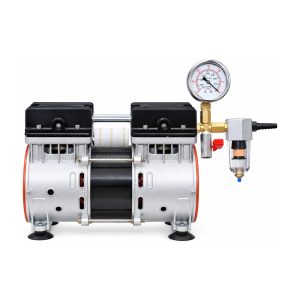 Vacuum Pump Cum Air Compressor PT-89View details →
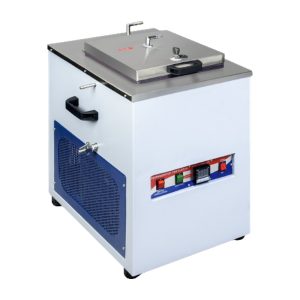 Chiller Refrigerated Circulator PT-80View details →
For most solvents 40–60 °C is enough, because the vacuum lowers the boiling point. Use about 50 °C for common solvents such as ethanol, ethyl acetate and acetone, and 60–90 °C only for high-boiling solvents like toluene, DMF and DMSO.
About 105 mbar with a 50 °C bath and the condenser at 10 °C. That is right at the limit of a 27″ Hg diaphragm pump, so the PT-89/35 piston pump gives faster, more reliable runs with ethanol.
About 75 mbar with a 60 °C bath and a 20 °C coolant. Water evaporates slowly, so use a large flask, steady rotation and a few drops of antifoam if the sample foams.
Yes, with a strong pump and a hot bath: DMF at about 35 mbar with an 80 °C bath, DMSO at about 12 mbar with a 90 °C bath. Use the PT-89/35 piston pump.
Absolute pressure in mbar is about 1013 minus 33.9 times the gauge reading in ″Hg. So 27″ Hg is about 100 mbar and 29.5″ Hg is about 15 mbar.
Request a quote, use the “Make an enquiry” button on any product page, WhatsApp us on +91-8199900060 or email popular1942@gmail.com (9 AM to 5:30 PM, Monday to Saturday). Tell us your solvents and batch volume and we will suggest a rotary evaporator, chiller and pump that work together.
Need help choosing the right model for your lab?